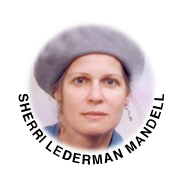

The gift my father gave me: The ability to laugh at anything.
As an adult, every time I spoke to my father he told me the latest jokes he had heard, no matter how inappropriate. No matter if I was calling from across the continent. He had to share what he thought was funny.
Which meant that my problems were not always taken so seriously. So that when I was in graduate school, suffering through finals, breaking up with a boyfriend and teaching undergraduates at my first job, and my father asked how I was doing and I said (not seriously) I felt like killing myself, his reply was: It won't help.
Which did put things in perspective.
Troubles were something to laugh at as were important people, events, etc.
My father made fun of anything and everybody.
The president, the Pope and Barbara Streisand were some of his favorite targets.
I think my father learned to be funny out of shame. He was an only child and his immigrant parents owned a lingerie shop. My father went to the store after school. But he was embarrassed by the frilly displays and also by his mother's immigrant habits -- the chicken feathers she used to clean the sink, the soft boiled egg she brought to his school at lunch to serve him.
So he made fun of things as a way of coping.
Making fun of things, a kind of dark humor, was also part of his Eastern European roots, a Yiddish culture that included sayings like: She was a whore in her mother's stomach. Or...They've buried nicer looking people than that.
Nothing was sacrosanct.
However, there is a price to pay when everything is turned into material for derision and mockery.
Needs and feelings are given short shrift and covered over. My own needs and feelings were sometimes not taken seriously. Moreover, I sometimes couldn't take myself seriously when I needed to.
But there is also an advantage. I learned to not take life so seriously. I learned how to have fun, how to play.
For my father, there was a price to his humor. Everything was essentially meaningless. There was a positive side to this -- he didn't worship any fashionable idols: money, success, etc. However, this view also imprisoned him in an essentially absurd view of life.
Now my father is dead. When I hear a funny joke, I still want to call him.
I myself cannot remember jokes although my 12-year-old son does. He spends all of his time on the computer on the jokes pages.
It's no wonder. It's our legacy.
It's thus not surprising that I have become a writer of humor.
But I hope that I have stood my father's attitude on its head.
For me, now, everything is material for loving parody. I try to take the bite out of my father's ridicule, the shame out of his mockery. I try to redeem his essentially absurd view of the world.
Of course, I don't always succeed.
But as the old Yiddish saying goes, "The smoothest way is full of stones."