


I love reading with my son. I love sitting with my arms around him, holding him close and watching the smile on his face when I get to his favorite part of a book. I love to hear the feeling of accomplishment in his voice as he fills in the next word or see the expression on his face as he points to his favorite picture.
WHAT, YOU ASK IS THE BEST REASON TO READ TO YOUR CHILD?
I could quote to you research proving that the younger you start reading to your child, the better he will do in school. This fact is true, but it is not the best reason. In my opinion, the best reason is the joy and satisfaction that you both can gain by reading together. Reading is one the few activities that can help you establish a warm, loving, give and take relationship with your child and at the same time teach him important skills that he will need for future academic success.
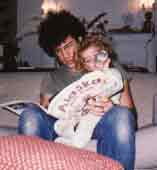
So now that I've told you why you should read with your child, let me give you some tips on how to read with your child.
START AT AGE SIX MONTHS
Hold him in your lap; put your arms around him and the book on his lap. If he squiggles away, stop. Don't hold him by force. Do try again shortly and attempt to at least turn a few of the pages of the book as you do so. If it's not fun for him, wait a week and try again. Initially, try for a minute at a time. If he is happy, continue for longer. If not, begin slowly and don't expect a baby to sit for long periods of time for any activity, including reading.
CHOOSE AGE APPROPRIATE BOOKS:
Do not try and read Little Red Riding Hood to your six-month-old.
From ages six months to two years, choose short books with either simple one to three word statements or short, simple sentences. Very young children also enjoy rhymes and short poems such as "Humpty Dumpty" and "Jack and Jill." You can take a book with long sentences, but nice pictures, and name the pictures as you turn the pages.
Board books are great for children under two. Young children can turn the pages independently and cannot tear the books into pieces. You should also have books with "normal" pages on hand to get your child used to the feel of a "real" book.
Starting from age two, you can start leaving around non-board books and begin gradually reading longer and slightly more involved books with your child. (Not that a two-year-old never tears books, but she is at least old enough to "know better" and learn not to do so.)
There is no set formula for when a child is ready for a particular book. Feel your child out. Every now and then take out a slightly "harder" book than she is used to. If she likes it, continue reading. If not, try again in a few months. In the recommended books section, you can find a list of great books with general age guidelines. Keep in mind that all children are different. If the books listed for age three do not hold your child's attention go back to the two-year-old section. Don't worry, each child develops at her own pace.
NEVER TRY TO FORCE A CHILD TO LISTEN TO A BOOK.
You can try a little convincing, but if your child is not interested, choose a different or shorter book. It is better to have your child enjoy reading for a short period of time than to have him dread long book-reading sessions.
REPEAT, REPEAT AND REPEAT
As boring as it is for us parents, children love to hear their favorite books over and over again. You may feel that hearing Brown Bear for the fifteenth time is driving you nuts, but those are just the words that your child may need to hear.
When you are reading a familiar story, stop in the middle of a sentence and let your child fill in the next word. If she doesn't, just go on. For your older pre-schooler (ages four to five) stop in the middle of a story and ask, "What happens next?"
Ask questions about the story line. Answering questions will improve your child's memory of the story and also helps you know that he understands what is going on.
INNOVATE AND EDUCATE
While it's important to read familiar books to your child, reading is also an opportunity to enrich his life with new, fun, and important information. Allow your child to hear his favorite stories, but also make sure to introduce new books on a regular basis.
Books are a great way to teach topics that are otherwise hard for a young child to discuss. A wonderful book, called, The Tenth Good Thing About Barney, by Judith Viorst, was a tremendous help to my son in dealing with the death of our family pet.
When you are introducing a new book, make sure to stop periodically and ask your child questions to make sure the book is meaningful to him. If he does not seem to understand, you can explain a bit in your own words and if that doesn't work, put the book away and try again in a few months.
Think about the topics he needs to learn or is interested in learning about and go to your local library or bookstore to find just the right book.
MAKE READING EXCITING
If you read a story as if it is boring to you, it will be boring to your child. Change your tone as you speak. Pretend you are the person speaking in the book and use different tones of voice. Reading should be a fun and interactive activity.
MAKE READING PART OF YOUR REGULAR ROUTINE
Establish a specific time during the day to read with your child. I find that bedtime is a great time for this. At my home, bedtime means hearing three books. Go over your schedule and see what will work in your home.
Don't let your child get the impression, however, that reading is for only one time of day. Have books available around the house and be open to reading books whenever possible. You can also encourage your child to "read" independently. Suggest that he sit with a book, look at the pictures and "read" to himself.
SET A GOOD EXAMPLE
Don't expect your child to want to read for fun if all she sees you doing in your free time is watching television. I know being a parent of young children is not conducive to having lots of free time for reading novels. But try and show your child that you love to read. Have at least one book around that you pick up and tell him is Mommy's or Daddy's book.
USE YOUR LOCAL LIBRARY
The best source of good books is your local library. Of course, if you can, it's great to purchase books. But supplying your child with large amounts of varied reading material does not need to be a financial burden. All the great children's books, as well as many that may merit reading, but are not necessarily worth purchasing, are within your child's reach at the local library. Teaching her that the library is a fun place to visit, is an important step towards establishing a lifetime love of reading.
A FEW PARTING WORDS
While the guidelines listed above are meant to give you some direction as to how to read to your child, keep in mind that reading is one of those activities where there is no one right way. Do not worry about the form and style that you use during story time. Never lose sight of the most important message that you can give to your child:
READING IS FUN!